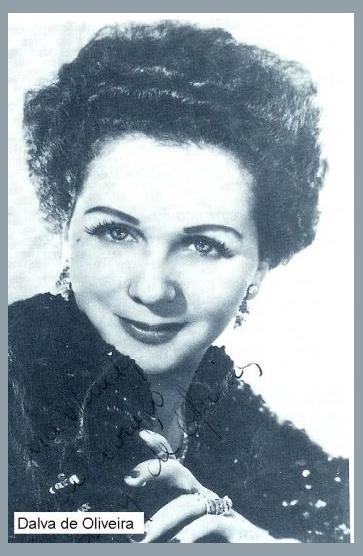


Her recordings from the 1930s onward shaped the country's musical fabric, even when the government took notice.
For a sense of her style, listen to 'A rosa e o beija-flor' or 'Errei Sim'. They capture that clear, unfussy delivery she was known for.
She sang what she wanted, and her voice found its way into sambas and boleros that became part of Brazil's musical fabric. In 1939, her performance of 'Bandeira Branca' drew attention from the dictatorial government for its themes of peace and social justice. Songs like 'A rosa e o beija-flor' and 'Errei Sim' show how her work stayed grounded in the sounds she was known for.
She made her professional debut at the Teatro Recreio in 1933 when she was sixteen. Over the years, she put out albums such as 'Dalva canta sambas' in 1952 and 'Canção do Amor Demais' the following year, and made a collaborative album with Dolores Duran in 1960.
LyroVerse editor's notes are short interpretation guides, not final verdicts. Read our Editorial policy, Corrections policy, and Methodology for the rules behind public reference pages.
Keep it compact: a lyric you come back to, a live memory, or the part of the catalog you would point someone toward first.
Sign in to post the first listener note. Reporting stays open to everyone.