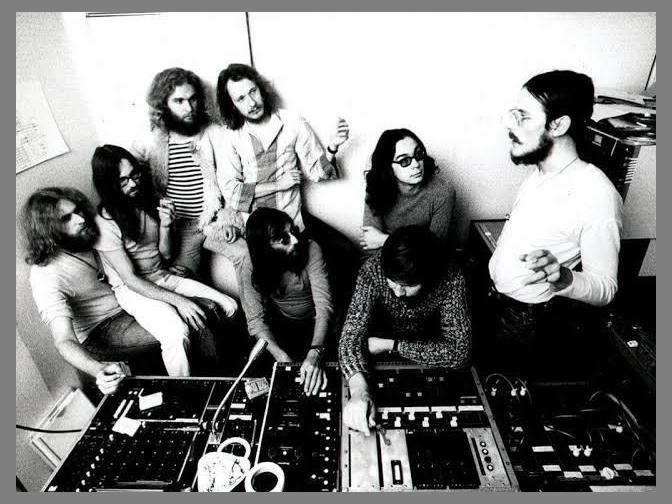
A German group whose 1970s recordings mixed rock, free jazz, and musique concrète into disruptive collages.
For a sense of their drift between repetitive grooves and sudden noise, try "Carnal Beatitude" or "Swansong." They don't offer anthems, just texture and disruption.
Faust matters because they never settled into a genre. Their 1971 self-titled album and pieces like "Meadow Meal" and "Der Baum" felt more like sound experiments than conventional songs. The 1973 collage "The Faust Tapes" and the relatively melodic single "Giggy Smile" from "IV" showed their range, but the core was always studio tinkering that puzzled labels and audiences alike.
They formed in Germany around the late 1960s with a shifting lineup. After early work like the 1971 album, they released "The Faust Tapes" and "IV" in 1973, followed by a hiatus and a return in the 1990s with albums like "Faust IV." Their activity centered on their own raw, assembled recordings, occasionally working with figures like Tony Conrad and Holger Czukay.
LyroVerse editor's notes are short interpretation guides, not final verdicts. Read our Editorial policy, Corrections policy, and Methodology for the rules behind public reference pages.
Keep it compact: a lyric you come back to, a live memory, or the part of the catalog you would point someone toward first.
Sign in to post the first listener note. Reporting stays open to everyone.