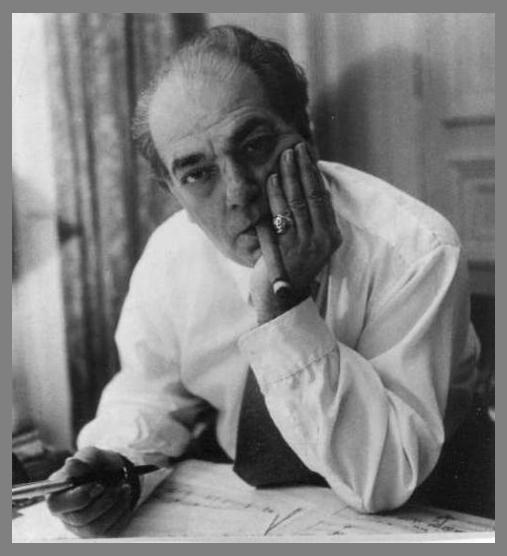

He blended Baroque forms with street rhythms from Rio, creating pieces like 'Bachianas Brasileiras No. 5'.
For a quick sense of his style, listen to 'Bachianas Brasileiras No. 5 - Ária (Cantilena)' and 'Rasga o Coração (Choros No.10)'. They show how he wove classical and folk sounds together.
Villa-Lobos took the sounds he heard in Rio's streets and gave them a place in concert halls. His 'Bachianas Brasileiras' series, especially the fifth one with its 'Ária (Cantilena)', mixes Baroque structures with Brazilian folk tunes. That fusion made his music feel both formal and deeply local.
He grew up in Rio playing guitar and cello, absorbing the city's street music. After a trip to Paris in 1922, he spent decades writing works like 'Rasga o Coração (Choros No.10)' and the 'Bachianas Brasileiras' series, which he finished by 1945. He kept composing into the 1950s, with his Ninth Symphony done in 1953.
LyroVerse editor's notes are short interpretation guides, not final verdicts. Read our Editorial policy, Corrections policy, and Methodology for the rules behind public reference pages.
Keep it compact: a lyric you come back to, a live memory, or the part of the catalog you would point someone toward first.
Sign in to post the first listener note. Reporting stays open to everyone.