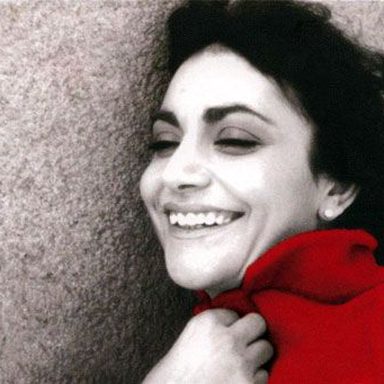
Mia Martini
Artist profile

Mia Martini

Mia Martini was born Domenica Bertè in Bagnara Calabra, Italy in 1947. She started singing locally as a teenager and released her first single 'Padre Padre'...

album196 lyric pages photo_library1 photo groups13 listeners here now Editor's note live
person Curated by Ethan Walker LyroVerse team
Start here

The pages that open this catalog up fastest

These picks surface the stronger lyric pages first instead of dropping you into one endless list.

Editor's note

Mia Martini's fragile, commanding Italian voice

Her 1971 ballad 'Almeno Tu Nell'universo' became a standard in Italian pop.

For a quick sense of her, try 'Almeno Tu Nell'universo' and 'Tenero E Forte.'

That voice could sound both fragile and commanding, which became apparent on songs like 'Piccolo Uomo.' 'Almeno Tu Nell'universo' became her most recognized work, a standard in Italian pop music. Her catalog includes other notable songs such as 'Donna' and 'Gli Uomini Non Cambiano.'

She started singing locally as a teenager and released her first single 'Padre Padre' in 1963 when she was sixteen. Her recordings from the 1960s and 1970s remain part of Italy's musical landscape.

edit_note Ethan Walker · LyroVerse team · Apr 19
verified

LyroVerse editor's notes are short interpretation guides, not final verdicts. If something needs a correction, visit About or Contact.

Artist at a glance

The fast read

196 lyric pages live 1 photo available Editor's note live Video on page
Photos

Visual archive

Real photos only. No placeholder gallery promo.

Open gallery
Mia Martini
Background notes

Archive material and source history

Mia Martini was born Domenica Bertè in Bagnara Calabra, Italy in 1947. She started singing locally as a teenager and released her first single 'Padre Padre' in 1963 when she was sixteen. Her voice had a particular quality that could sound both fragile and commanding, which became apparent on songs like 'Piccolo Uomo'.

In 1971 she recorded 'Almeno Tu Nell'universo,' a ballad written by Bruno Lauzi. The song became her most recognized work, a standard in Italian pop music. She faced persistent rumors about witchcraft during her career, which affected her standing in the industry at the time.

Her catalog includes other notable songs such as 'Donna' and 'Gli Uomini Non Cambiano.' Mia Martini's recordings from the 1960s and 1970s remain part of Italy's musical landscape.

Quick answers

What this artist page can answer fast

Where should I start with Mia Martini on LyroVerse?

The Start here section opens with Agapimu, Aiutami, and Al Mondo so you can move through the artist's stronger lyric pages first.

How many lyric pages are live for Mia Martini?

LyroVerse currently has 196 visible lyric pages for Mia Martini.

Does Mia Martini have photos on LyroVerse?

Yes. There are 1 photo available, and the preview gallery on this page links to the full photos section.

Does LyroVerse have an editor's note for Mia Martini?

Yes. The editor's note on this page is a short LyroVerse team guide, not a final verdict on the artist.

Artist Community

Not just lyrics. The conversation around them.

Follow the artist, compare interpretations across songs, and leave corrections that help the catalog stay sharp.

Open artist hub
0 followers Artist hub stays noindex until the conversations are proven strong
Listener comments

What people are saying

0 comments
Share a short memory or first impression

Keep it compact: a lyric you come back to, a live memory, or the part of the catalog you would point someone toward first.

Sign in to post the first listener note. Reporting stays open to everyone.

No listener comments on Mia Martini yet.