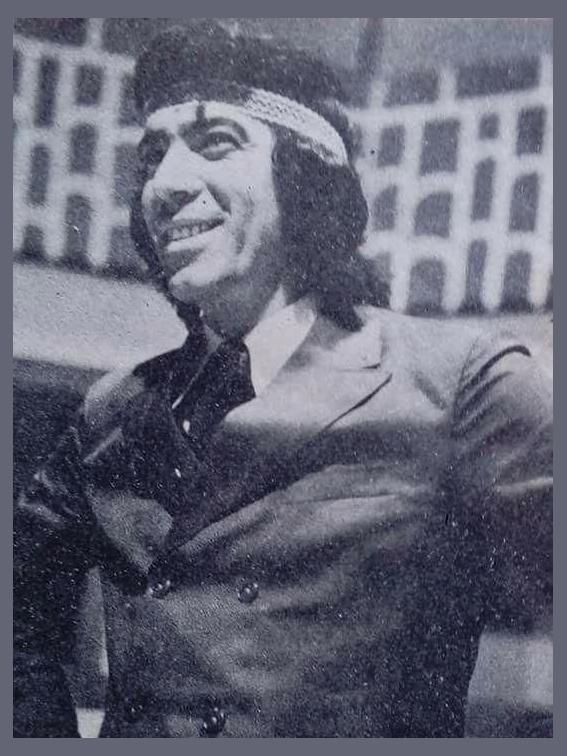
A Rio de Janeiro voice from the 1930s who recorded with Ary Barroso and Noel Rosa.
For a good sense of his style, try 'Para o Que Der e Vier' from 1945 or 'Dia Mais Triste da Vida.' They're both pretty direct, no-fuss sambas.
He came up singing with the Estação Primeira de Mangueira carnival bloco in the 1930s, which gives his recordings a neighborhood authenticity you can hear. The 1945 track 'Para o Que Der e Vier' became one of his signature songs, and he worked with composers like Ary Barroso, who wrote some of Brazil's most enduring standards. Songs like 'Dia Mais Triste da Vida' and 'Quando Tudo Termina' have that straightforward, conversational samba feel.
He made his first recording in 1934 with 'Meu Viver.' By 1945 he had cut 'Para o Que Der e Vier,' which stuck as a well-known number. Later recordings included titles like 'Meus Tempos de Criança (A Professorinha)' and 'Onde É Que Eu Estava Com a Cabeça.'
LyroVerse editor's notes are short interpretation guides, not final verdicts. Read our Editorial policy, Corrections policy, and Methodology for the rules behind public reference pages.
Keep it compact: a lyric you come back to, a live memory, or the part of the catalog you would point someone toward first.
Sign in to post the first listener note. Reporting stays open to everyone.