
Page type: artist reference
Canonical path: /okun-jamba
Lyric pages live: 22
Photos available: 2

1 / 2
Artist profile
Okun Jambá
Okun Jambá formed in Salvador, Bahia in 1993 as a collective of musicians and dancers rooted in candomblé, an Afro-Brazilian religion centered on the orixás....
person
Curated by Ethan Walker
LyroVerse team
Start here
The pages that open this catalog up fastest
These picks surface the stronger lyric pages first instead of dropping you into one endless list.
Princesa Irene
Video on page · 19 visits
arrow_forward
Okun Jambá
Video on page · 18 visits
arrow_forward
Meu Tambor É Resistência
Video on page · 17 visits
arrow_forward
Oxum Ipondá
Video on page · 14 visits
arrow_forward
Senhor do Bonfim
Video on page · 14 visits
arrow_forward
Sete Vezes (Ponto de Exu)
14 visits
arrow_forward
Artist at a glance
The fast read
22 lyric pages live
2 photos available
Reference snapshot
The facts this page is built to carry clearly
Use this page as the public reference for the artist summary, linked lyric pages, and any LyroVerse editor's note on the page. Listener comments remain user-generated context.
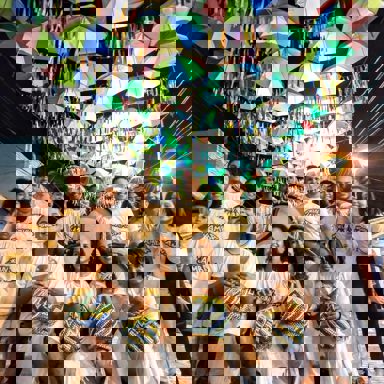
Photos
Open gallery
Visual archive
Real photos only. No placeholder gallery promo.

Songs in focus
Keep moving through Okun Jambá
Princesa Irene
Video on page · 19 visits
arrow_forward
Okun Jambá
Video on page · 18 visits
arrow_forward
Meu Tambor É Resistência
Video on page · 17 visits
arrow_forward
Oxum Ipondá
Video on page · 14 visits
arrow_forward
Senhor do Bonfim
Video on page · 14 visits
arrow_forward
Sete Vezes (Ponto de Exu)
14 visits
arrow_forward
Sou de Iapoiuque (Coronel)
Video on page · 14 visits
arrow_forward
Princesa Nagô
Video on page · 13 visits
arrow_forward
Saudação a Edé
Video on page · 13 visits
arrow_forward
Faz Terra Tremer
Video on page · 12 visits
arrow_forward
Loci Loci, Logun Edé
Video on page · 12 visits
arrow_forward
Mãe Oxum
Video on page · 12 visits
arrow_forward
Rainha do Mar
Video on page · 12 visits
arrow_forward
É Das Ondas do Mar
Video on page · 12 visits
arrow_forward
Baque de Aruanda
Video on page · 11 visits
arrow_forward
Dona Amara
Video on page · 11 visits
arrow_forward
Background notes
Archive material and source history
Okun Jambá formed in Salvador, Bahia in 1993 as a collective of musicians and dancers rooted in candomblé, an Afro-Brazilian religion centered on the orixás. Their music draws directly from the ritual chants and percussion of that tradition, though they've always approached it with a contemporary ear rather than treating it as purely archival.
Their 1996 debut album 'Sete Vezes (Ponto de Exu)' brought them wider attention, with the title track becoming something of an anthem. That song, along with others like 'Loci Loci, Logun Edé' and 'Meu Tambor É Resistência,' shows how they work within candomblé's musical language while making it feel immediate and alive outside the terreiro.
Over time they've collaborated with figures like Caetano Veloso and Gilberto Gil, though their sound remains firmly anchored in the rhythms and spiritual themes of Bahia. They've faced some criticism from more conservative religious quarters for how they handle sacred material, but that tension seems part of what keeps their music from becoming merely decorative.
Quick answers
What this artist page can answer fast
Where should I start with Okun Jambá on LyroVerse?
The Start here section opens with Princesa Irene, Okun Jambá, and Meu Tambor É Resistência so you can move through the artist's stronger lyric pages first.
How many lyric pages are live for Okun Jambá?
LyroVerse currently has 22 visible lyric pages for Okun Jambá.
Does Okun Jambá have photos on LyroVerse?
Yes. There are 2 photos available, and the preview gallery on this page links to the full photos section.
Artist Community
Open artist hub
Not just lyrics. The conversation around them.
Follow the artist, compare interpretations across songs, and leave corrections that help the catalog stay sharp.
Listener comments
What people are saying
No listener comments on Okun Jambá yet.
Keep it compact: a lyric you come back to, a live memory, or the part of the catalog you would point someone toward first.
Sign in to post the first listener note. Reporting stays open to everyone.