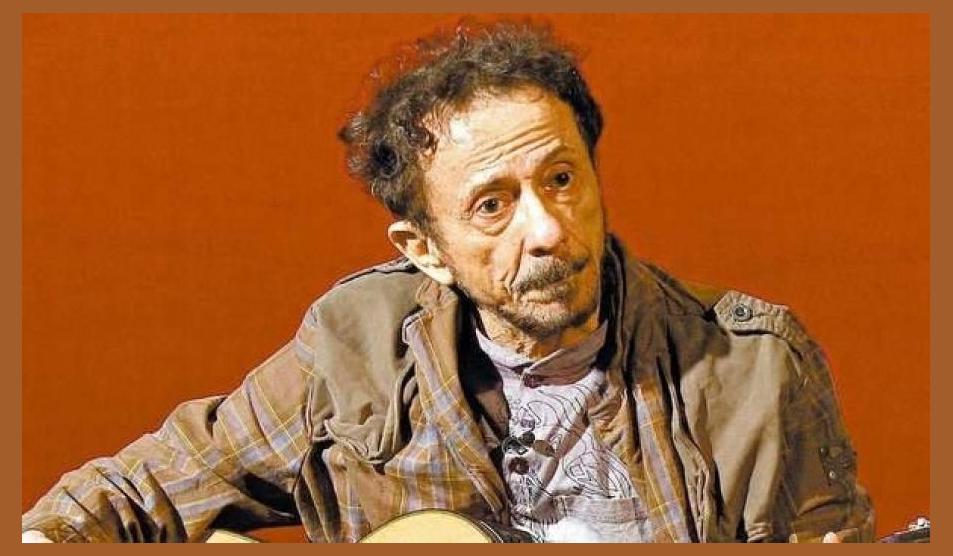


A Brazilian composer who builds songs from street noise, kitchen utensils, and sharp social observation.
For a quick sense of his method, try 'Menina, Amanhã de Manhã (o Sonho Voltou)' or 'Tô'. They're both built from everyday sounds and Brazilian rhythms, but they never settle into anything predictable.
Tom Zé's music doesn't just play with Brazilian rhythms, it dismantles them and rebuilds them with whatever's at hand. A song like 'Pecado, Rifa e Revista' is typical: it feels both meticulously constructed and chaotically alive, full of dissonant harmonies and lyrics that poke at social absurdity. He's been doing this since the late 1960s, making over twenty albums that treat music as both a formal experiment and a form of commentary.
He started in architecture before turning to music, pulling from the sounds of Bahia and avant-garde figures like John Cage. His 1976 album 'Estudando o Samba' and later work like 'The Hips of Tradition' in 1998 kept refining that mix of structure and street noise. More recent albums like 'Papa Francisco Perdoa Tom Zé' and 'Tribunal do Feicebuque' show he's still at it, folding social critique into the same playful, complex arrangements.
LyroVerse editor's notes are short interpretation guides, not final verdicts. Read our Editorial policy, Corrections policy, and Methodology for the rules behind public reference pages.




Keep it compact: a lyric you come back to, a live memory, or the part of the catalog you would point someone toward first.
Sign in to post the first listener note. Reporting stays open to everyone.